
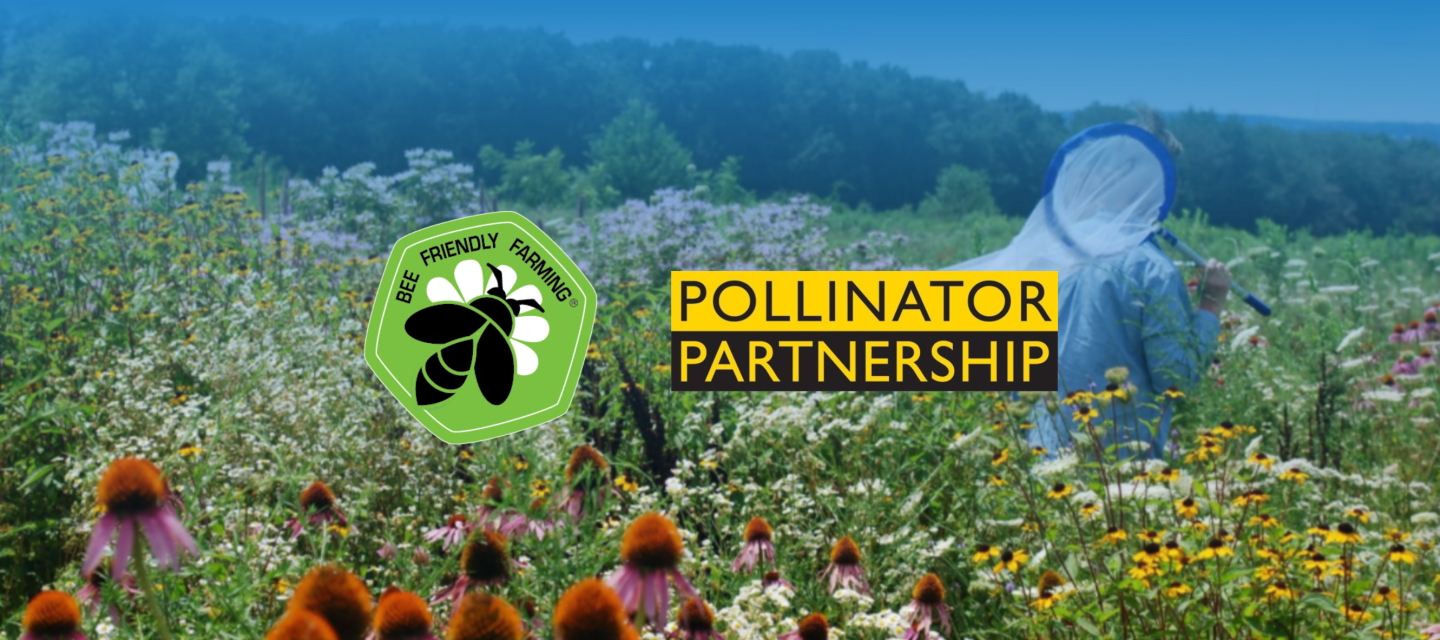
Happy Pollinator Week!
In honor of this week, we wanted to create a short, instructional video to serve as an aid for LIVE growers aiming to meet Bee Friendly Farming requirements. This video addresses:
- LIVE required Bee Friendly Farming standards & how to meet them including the 3% forage requirement
- How to provide clean, accessible water for bees
- Suggestions for native pollinator-friendly plants (offering regionally specific suggestions)
- Integrated pest management measures to implement including end-capping and hedgerows
LIVE x Bee Friendly Farming Partnership:
In 2022, LIVE partnered with Pollinator Partnership, the world's largest nonprofit dedicated to the health of pollinators. With the recent partnership, LIVE members are now extended P2's Bee Friendly Farming (BFF) Certification, as BFF criteria is met with LIVE standards. LIVE also has a similar partnership with Salmon Safe.
Through this partnership, BFF helps to preserve and protect pollinator populations by aiding in the implementation of positive, incremental changes on agricultural properties. BFF encourages farmers to incorporate affordable, accessible, science-based practices, such as offering floral and nesting resources for bees, and integrated pest management strategies.
Resources mentioned in video:
- Ecoregional Planting Guides - enter your zip code to get a free regionally specific guide
- Find Your Roots tool - create pollinator-friendly native plant lists for your habitat
- A Technical Guide for Farmers and Ranchers in the Pacific Northwest
- Bee Friendly Farming Handbook
- Bee Basics: An Introduction to our Native Bees
2017 LIVE Annual Report
The 2017 LIVE Annual Report is available for download below. To request a hard copy, email admin@livecertified.org. New Arrivals
2018 LIVE Standards Updates
Below is a summary of Vineyard Joint Technical Committee (JTC) decisions related to LIVE standards, including the Green and Yellow Lists as well as the LIVE Checklist. These decisions are based on feedback from researchers, members, inspectors, and partners throughout the season, and they will be...